
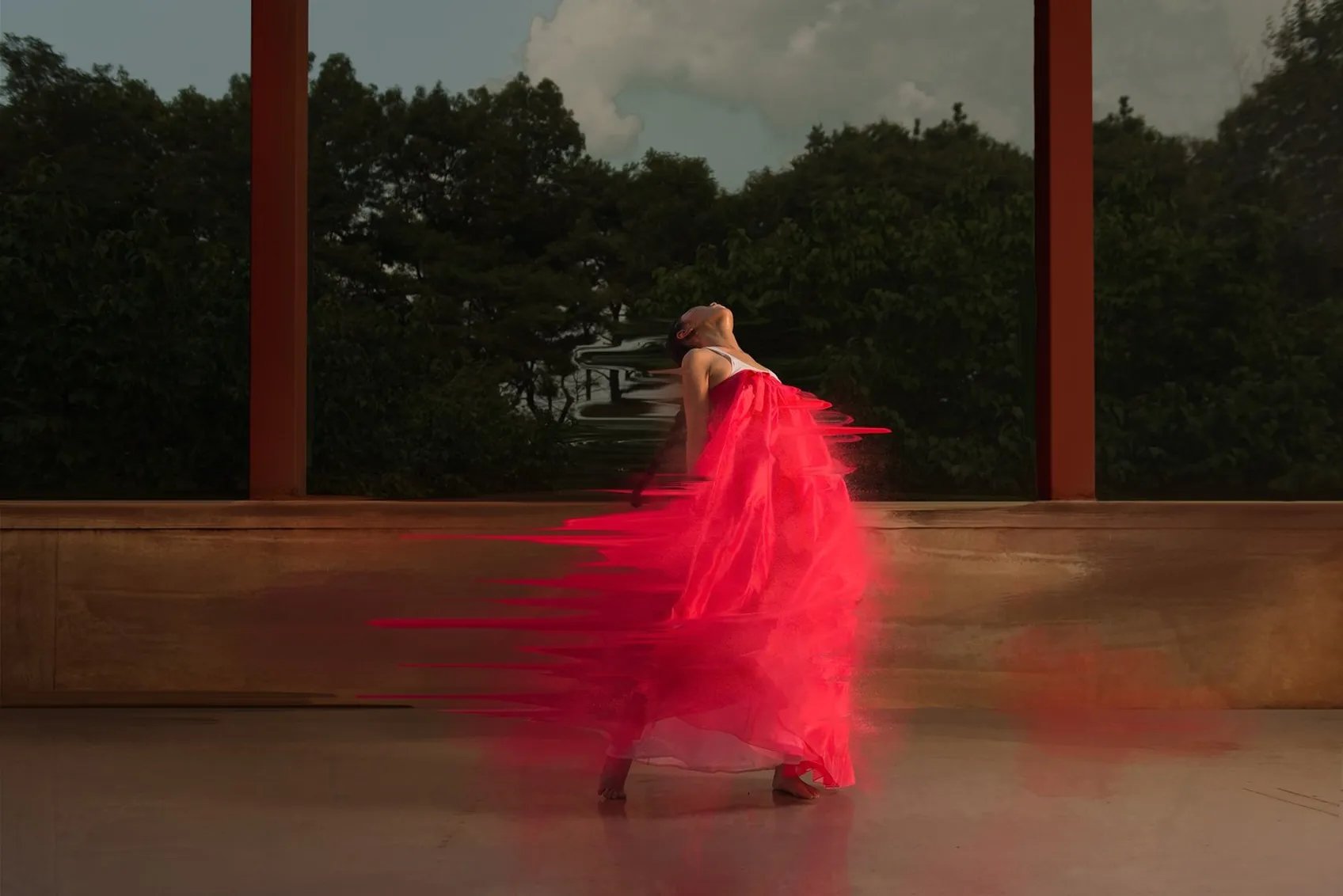
Songs of the Inner Chamber
South Korea
2017


In South Korea, conversations about gender are still controversial. The statistics tell part of the story — women have achieved significant educational and health equality, but face persistent economic and political inequality. The rest of the story lives in the body, in silence, in the space between what is felt and what can be said.
Songs of the Inner Chamber was created during a three-month artistic residency in South Korea, produced in partnership between CALQ and the National Museum of Modern and Contemporary Art. Over three months, working alongside local dancers, the project translates contemporary expressions of gender into choreographic interventions across Korea's modern and traditional landscapes.
Gender has been central to this practice since 2003 — understood not as a fixed identity but as something performed, constructed, and contested. Korea deepened that inquiry. Rather than arriving with answers, the approach was to listen: to let the dancers — women and men — bring their own stories, frustrations, and freedoms into the frame. Each image was built collaboratively, using movement, costume, theatrical light, and public space to make visible what is rarely permitted to be seen.
The results are portraits of people navigating the distance between who they are and who their culture permits them to be.
"This project reminded me why it is meaningful to keep dancing," one collaborator said. After seeing an image of herself escaping through a window, she added: "Whenever I see this picture, it makes me feel relief. This picture is the same expression that I feel."
Songs of the Inner Chamber does not single out South Korea. It uses its specificity as a lens — one that refracts across Latin America, the West, and everywhere that gender remains a site of struggle. These images amplify voices that often go unheard, giving them form, movement, and a life beyond borders.